A Guide to Collecting Friday Night Magic (FNM) MTG Promo Cards - Tips & Strategies to Minimize Spend and Maximize Fun
TL;DR
If I had one advice for MTG collectors out there, is this — patience.
The urge to complete your collection as quickly as possible is very real. But remember that part of the fun is the process — the process of looking for that perfect card, from a reputable seller, at the right price, with a reasonable shipping cost.
A big part of collecting is the chase itself. Knowing you got a deal is a huge thrill, even if money isn’t an issue for you (although we all know that MTG can be a moneysink). Sometimes coming across a great deal is luck, but most times it requires patience.
So be patient. Enjoy the process and you will be rewarded.
Backstory
I recently got back into MTG.
I played pretty seriously back in high school and university. Started around Invasion, played most heavily around Mirrodin through to Kamigawa, but eventually called it quits and sold all my cards right around Coldsnap — I needed to focus on school and life got busy.
But the allure of the game is strong. I kept up-to-date through Reddit over the years, daydreaming about what it would be like to get back into it one day. Wizards of the Coast releases new sets every year. Like any savvy business, WotC kept up their innovation of the game by introducing new game mechanics, redesigning the cards’ aesthestics, releasing new foil styles (but actually really confusing), and keeping new & old fan base engaged by expanding their partnerships to include other franchises like Final Fantasy, Transformers, Street Fighter and of course, Marvel. Some of these decisions are quite controversial among the fan base, but you can’t deny one thing — the cards look damn good.
And I’m a sucker for pretty things.
While I still don’t have time to build decks and actually play, I decided to continue my love of the game through collecting cards that I loved and are meaningful to me. I first just bought singles and small sets — the whole foil set of Transformers in Japanese (that I was able to nab a pretty good deal on eBay), foil Fledgling Dragon from Judgement (my user name for an old forum), many DCI judge promo singles (Living Wish, Decree of Justice, etc.). None of these were very expensive, I just needed something to quench my thrist of the hobby.
But this felt random. I wasn’t trying to “complete” anything, I was just buying whatever I liked, which is fine, but it felt a little aimless.
Then I set my eyes on FNM.
In many ways FNM is the perfect set to collect:
It’s a finite set of 234 cards.
The set started in 2000 and ended in 2019, then briefly “reintroduced” in 2023 in a cross-collab with Duel Masters. As a result, the set reflected a portion of MTG history where it went through many redesigns. That’s perfect for me as it scratched my nostalgic itch and exposes me to new cards, mechanics, design and art styles.
With the exception of the Human // Wolf token from 2012, every card is foil by default. So they are all shiny!
What drives the prices?
Generally speaking, collecting MTG is very similar to collecting other things (stamps, coins, other TCGs, etc.) in the sense that their prices obey the basic law of economics — supply and demand. The more there is of something on the market, the less expensive it is. And vice versa. As a result, in most cases, older cards tend to be on the more expensive side, and more recent releases are cheaper.
In addition to scarcity, two other factors govern MTG prices:
Playability: the more playable a card is, especially playable across multiple formats, the higher the price.
Aesthetics: most cards in this set have been reprinted since their original release. So old-school border, design and original art tend to hold more value in collectors’ eyes.
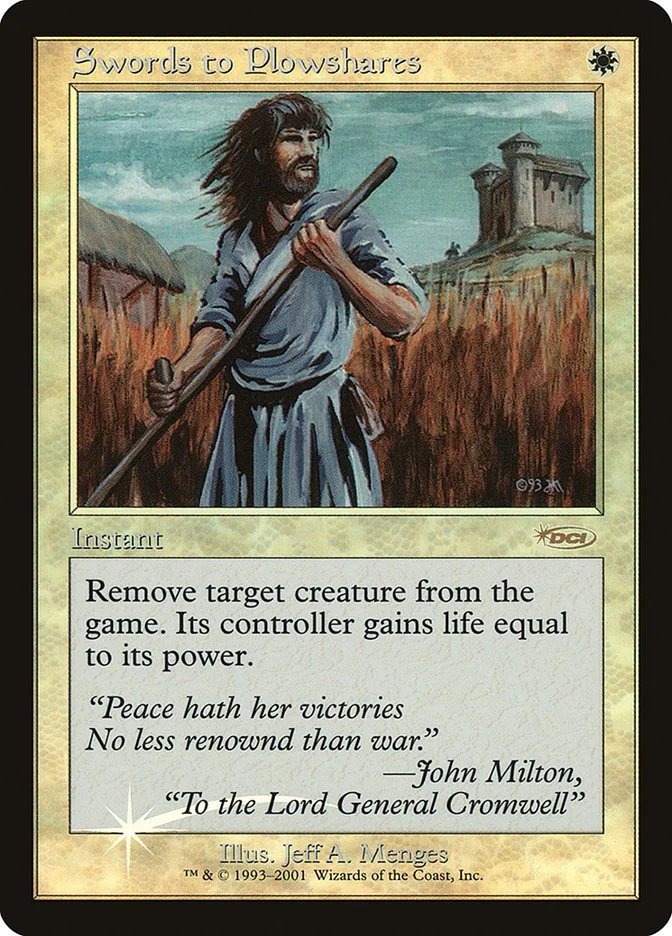
The prime example here is Swords to Plowshares, the most expensive card in this set. At the time of writing this, its market price is $401.94 USD. It is the perfect combination of high scarcity (released almost 25 years ago, limited supply), high playability (one of the most efficient removals in the history of MTG), and visually appealing (old border and design, OG art, foil).
(A Little) Housekeeping
So just we are all on the same page:
I pulled the full card list from Fandom, and numbered them 1 to 234. Throughout this article, I’ll be referring to the card number and its name for easy reference.
The prices are in USD, pulled from TCGPlayer around the time of writing. In most cases, I took the lowest price of the best conditioned card listed on TCGPlayer, with some discretions applied. When there are no listings, I took the market price. TCGPlayer doesn’t always have the “best” prices, but for this exercise I needed a single source of truth and TCGPlayer is the best one out there.
With that, the total cost of this set at the time of this writing is $3,128.72 USD or $4,380.21 CAD.
Breakdown the Set
I think about this set in the following groups, in order of easiest (and cheapest) to hardest (and more expensive) to collect:
#153 to #230 - the 78 cards (33% of total set) from 2013 to 2019 cards are among the cheapest and easiest to collect in this set. With the exception of Reliquary Tower (#154) and Farseek (#155), every card is under $5, with an average price of $1.19.
#131 to #152 - this group of 22 cards (9% of total set), from Artisan of Kozilek to the double-sided Human // Wolf token, is the next easiest to complete. The three most expensive cards in this group are Gitaxian Probe, Dismember and Go for the Throat — all low-mana, high-utility cards.
Artisan of Kozilek is the first FNM card with the few Friday Night Magic stamp. The other two are Squadron Hawk and Rhox War Monk.
The Human // Wolf token is the only non-foil in this set.
#38 to #130 - these 93 cards (40% of total set) all bear the “FNM” watermark. Availabilies in this group vary quite a bit, so the prices are all over the place. The median price of this group is $5.72 USD, with an aveage price of $12.46 USD.
The priciest cards in this group are Reanimate, Brainstorm, Isochron Scepter, Cabal Coffers and Cabal Therapy. These five alone will set you back $469.34 USD.
There are also a number of them that are quite hard to find at a good price, especially in NM or even LP condition. I had to do a lot of searching to find decent deals on Mother of Runes, Counterspell, Eternal Witness, Carrion Feeder and Spellstutter Sprite. I also had to compromise on the quality for some of these to get some under my budget.
Then there are some that are just hard to find, period. They weren’t the most expensive cards, but I had a lot of trouble finding Deep Analysis, Krosan Warchief, Withered Wretch and Roar of the Wurm that weren’t insanely overpriced.
#1 to #37 - this last group of 37 cards is the hardest to complete due to low avabilaity and high price. These 37 cards, only 16% of the set, represent more than 50% of the total value of the set at a whopping $1,639.99 USD. This is largely driven by supply, as all cards in this group are pre-Aug 2003. Unless you are willing to pay way above market price, this group is going to take some time to complete. At the time of this writing, I’m missing 9 cards from this group.
Duel Master Collab - in 2023, MTG partnered with Duel Master and released four crossover foil promos in Japanese: Nicol Bolas, Pouncing Jaguar, Serra Angel and Earthquake. Pouncing Jaguar and Earthquake are reasonably priced, at around $13 and $12, respectively. Nicol Bolas at $86 and Serra Angel at $65, not so much.
Strategy & Tips
— Get organized —
Collecting this many cards, from multiple sellers, potentially from different countries, with varied shipping speed and cost, sometimes with unexpected issues (shipping delays, received wrong card, etc.), can get messy quickly if you don’t stay organized.
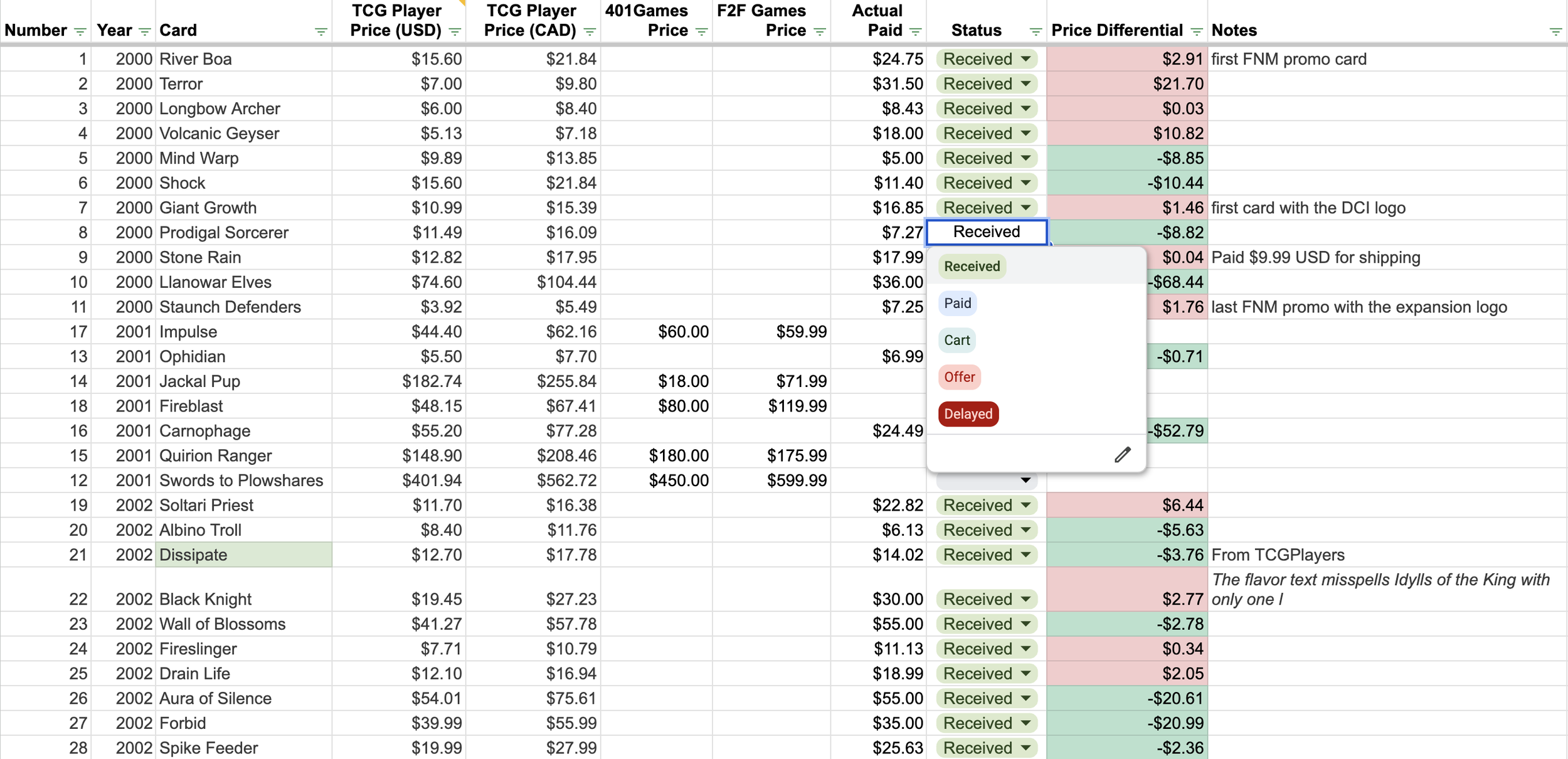
What I found to be the most effective is to track via a simple Google Sheet. Apps like Collectr can work, and they are good for live price tracking if your goal is to profit. But I find the good ol’ Google Sheet allows for maximum customization and flexibility. It is especially helpful for tracking statuses and spending.
One feature I built into my sheet is “price differential” — the difference between the price I paid vs. the price listed on TCGPlayer. It’s not perfect, but it gives me a general sense of whether I’m over or underpaying vs. market price. This allows me to maximize my ROI in the long run.
— Focus on “the bulk'“ first —
The ultimate goal of any collection is completion, so your primary goal should be to try to get a large percentage of this collection first. And as noted above, #38 to #230 contains nearly 80% of the entire collection, but only about 40% of the total dollar value. Most cards here are less than $5, many are under $1.
The high availability of these cards, particularly the newer prints, means many eBay sellers and local game stores stock them. This allows you to purchase a large quantity from a single vendor. By buying 20-30 low-cost cards at once from one seller, you maximize shipping efficiency and significantly reduce your cost per card. This budget-friendly approach minimizes the hidden costs of collecting while quickly providing you with a substantial number of cards.
Securing “the bulk” also offers a huge psychological advantage. Getting 80% of your checklist done provides immediate momentum and allows you to shift your budgeting focus. You are now free to dedicate your entire remaining budget and time to patiently tracking down the handful of high-value staples like Swords to Plowshares and Brainstorm.
— Compromise on quality —
Yes, I’m telling you that you don’t need to get NM for every single card.
Of course, buying NM is the most desirable option, but sometimes compromising on quality and opting for a LP, MP, or even an HP can save a lot of money while bringing you closer to completion.
I recently purchased an HP Cabal Therapy for $16.52 USD. It was in surprisingly good condition, with no visible wear. While it had some play and a bit of smudge on the front, it was still a great deal. The NM listing on TCGPlayer is $50 USD, so I saved quite a bit.
While you won’t be able to compromise on every card, selectively and strategically choosing the more expensive ones will save you a lot of money.
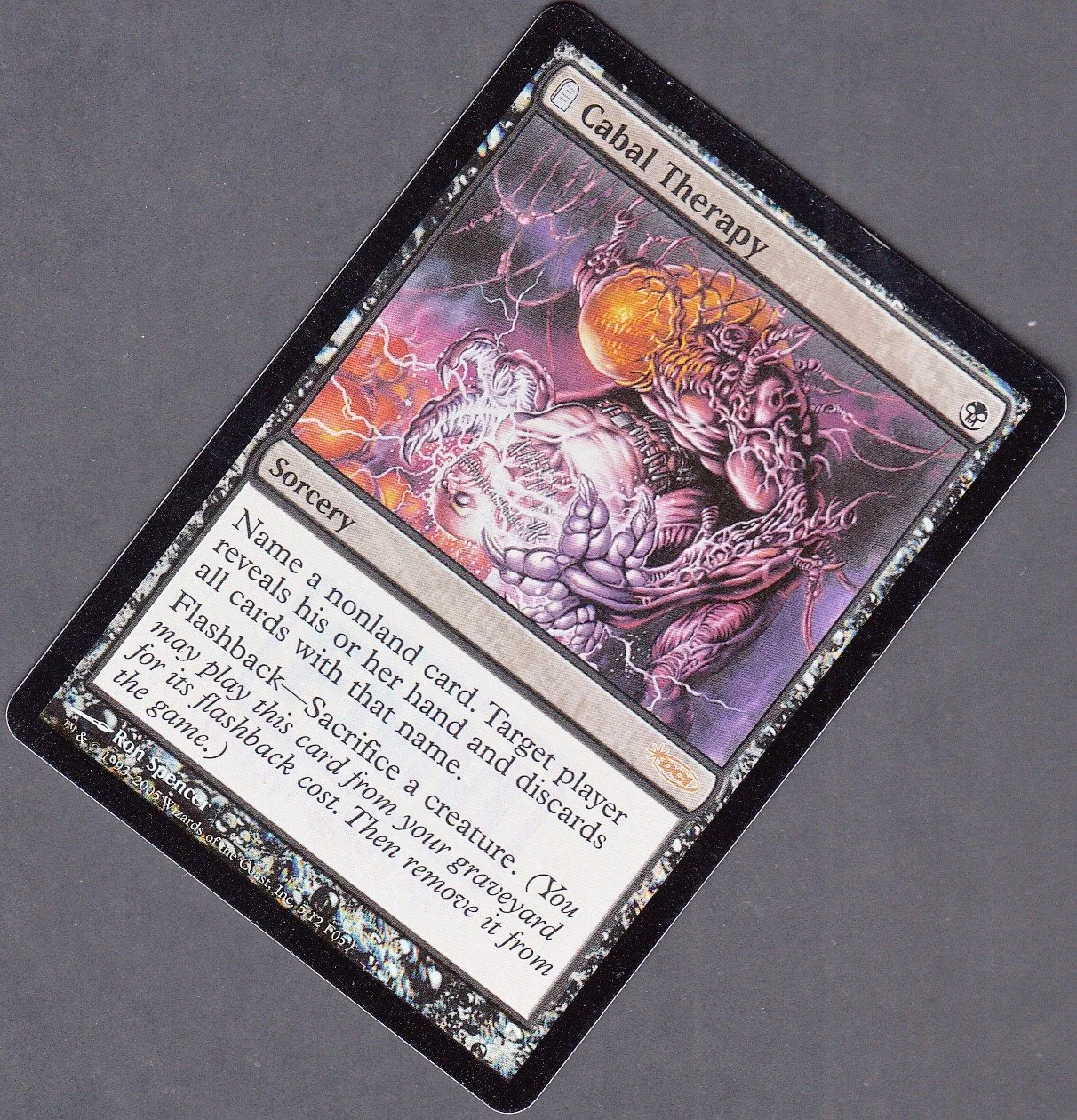
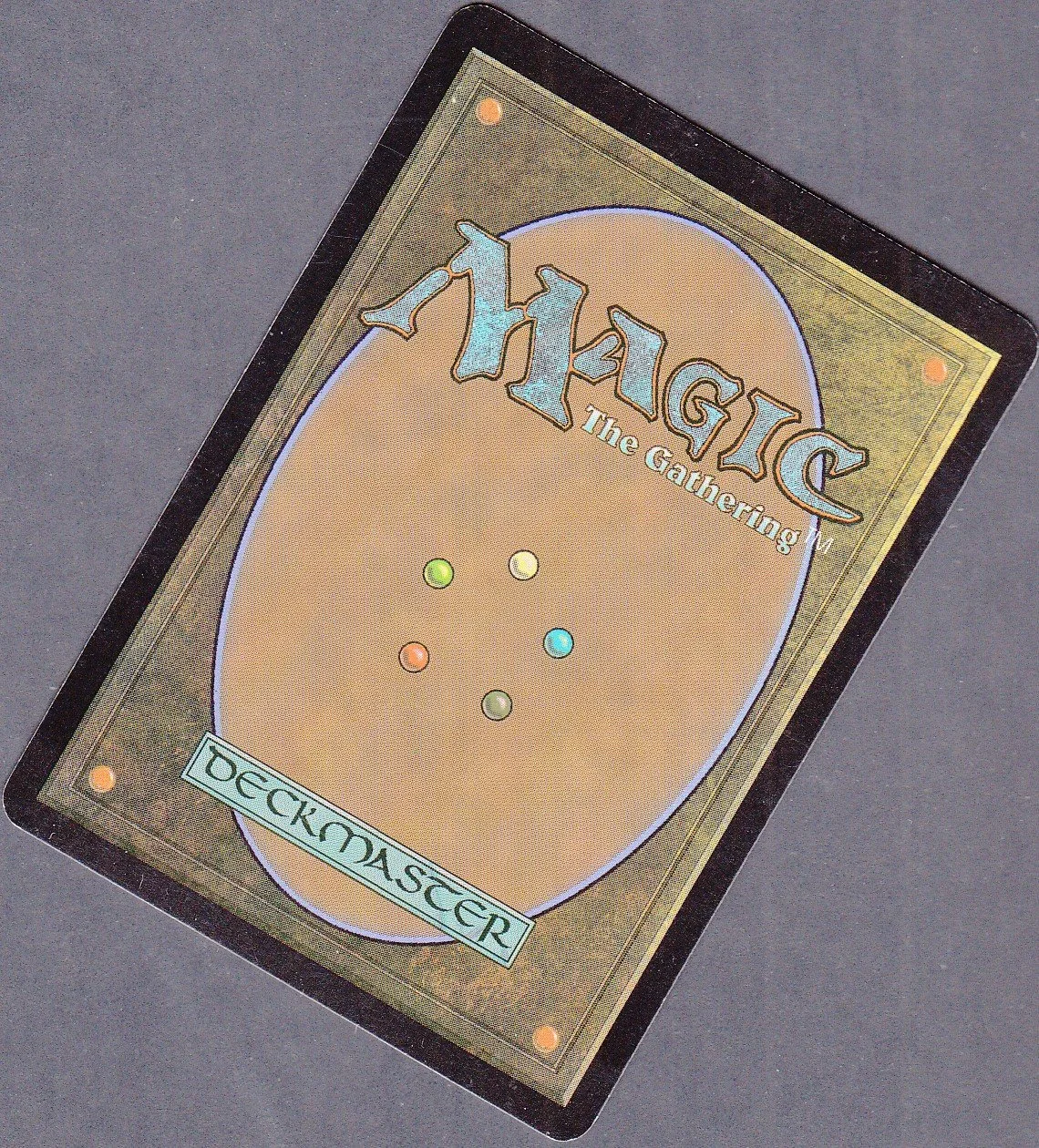
Did I score a good deal? Judge for yourself!
— Combine shipping —
Shipping is the single most hidden cost in collecting. If you aren’t careful, you could end up paying hundreds of dollars in shipping costs when it’s all said and done. Sometimes it’s just hard to avoid, but there are ways to minimize it.
Try to buy from a single seller as much as you can. When you find a card you want, also search that seller’s inventory for other cards you are missing. Compare prices with other sellers and factor in the shipping cost to see what makes the most sense.
Many sellers on eBay will offer combined shipping. Many LGS online stores will offer discounted or free shipping when a certain spend amount is met.
— Always search on LGS’s website —
One of the advantages of TCGPlayer and eBay is their aggregation feature. You can find items from numerous sellers without individually searching. However, this comes at a cost: the items are marked up because they pay a percentage of the sales. Additionally, TCGPlayer operates in USD, so if you’re outside the US, you’ll also incur an exchange rate for both the item and shipping.
A good tactic is to find the item you want on TCGPlayer or eBay. Then, search for the seller’s website. You’ll probably find the item for less. (In fact, in general try to comparison shop as much as possible.)
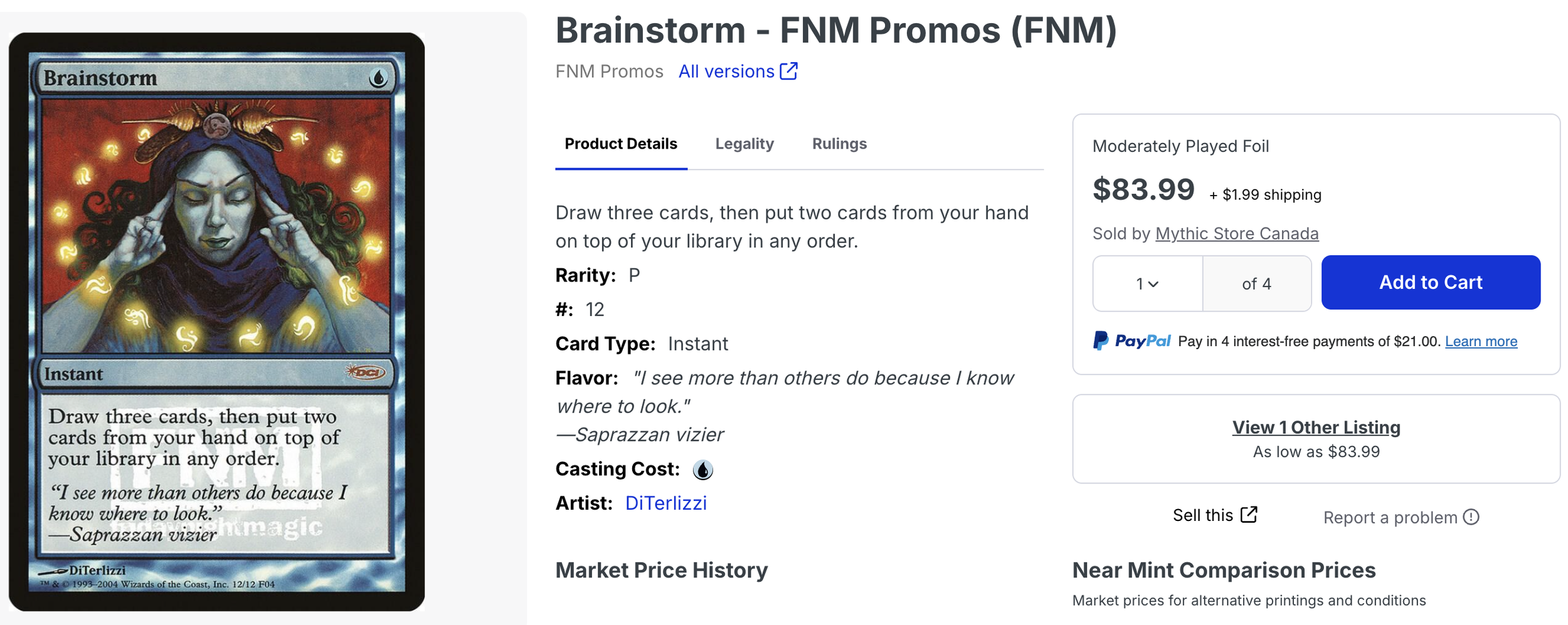
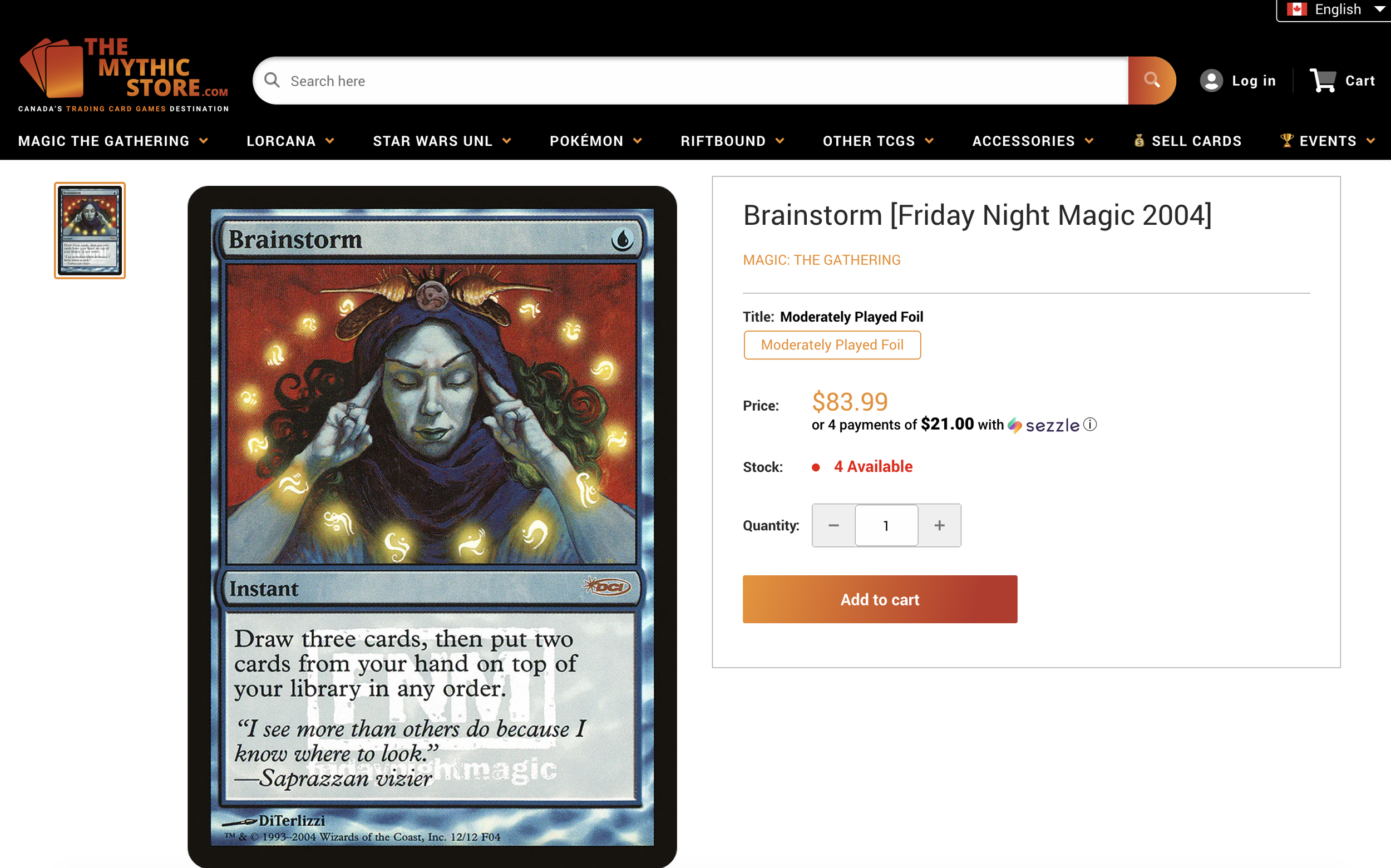
Example: the only TCGPlayer listing of Brainstorm at the time of this writing is $83.99 USD, sold by Mythic Store Canada.
But that same listing is $83.99 CAD on the store’s website. So buying directly from the store’s website will save you 40% (FX) in this case.
— Set up alerts —
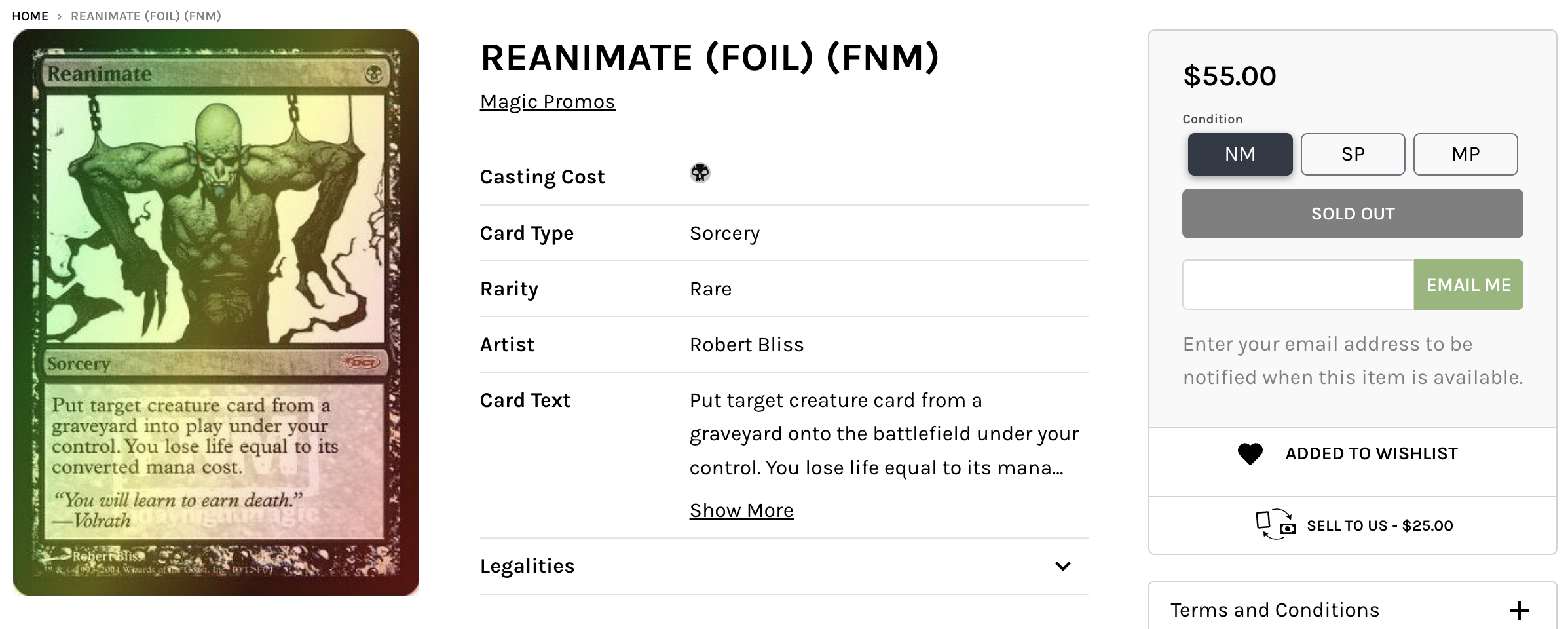
When shopping on eBay, make sure to add interested items to your watchlist. Periodically you’ll get email reminders when a watched item goes on sale, or a seller makes you an offer on those items.
Sign up for email alerts on LGS’s websites (e.g., 401 Games) will also allow you to stay on top of items and deals when they become available.
That’s it! (for now)
At the time of this publication, I’m shy of 11 cards.
I’m trying to adhere to my own advice by being patient and continue to hunt for deals on these. If you spot any good deals in the wild, hit me up! Also let me know if you have any tips and tricks that you think I should include in this guide.
Happy collecting!